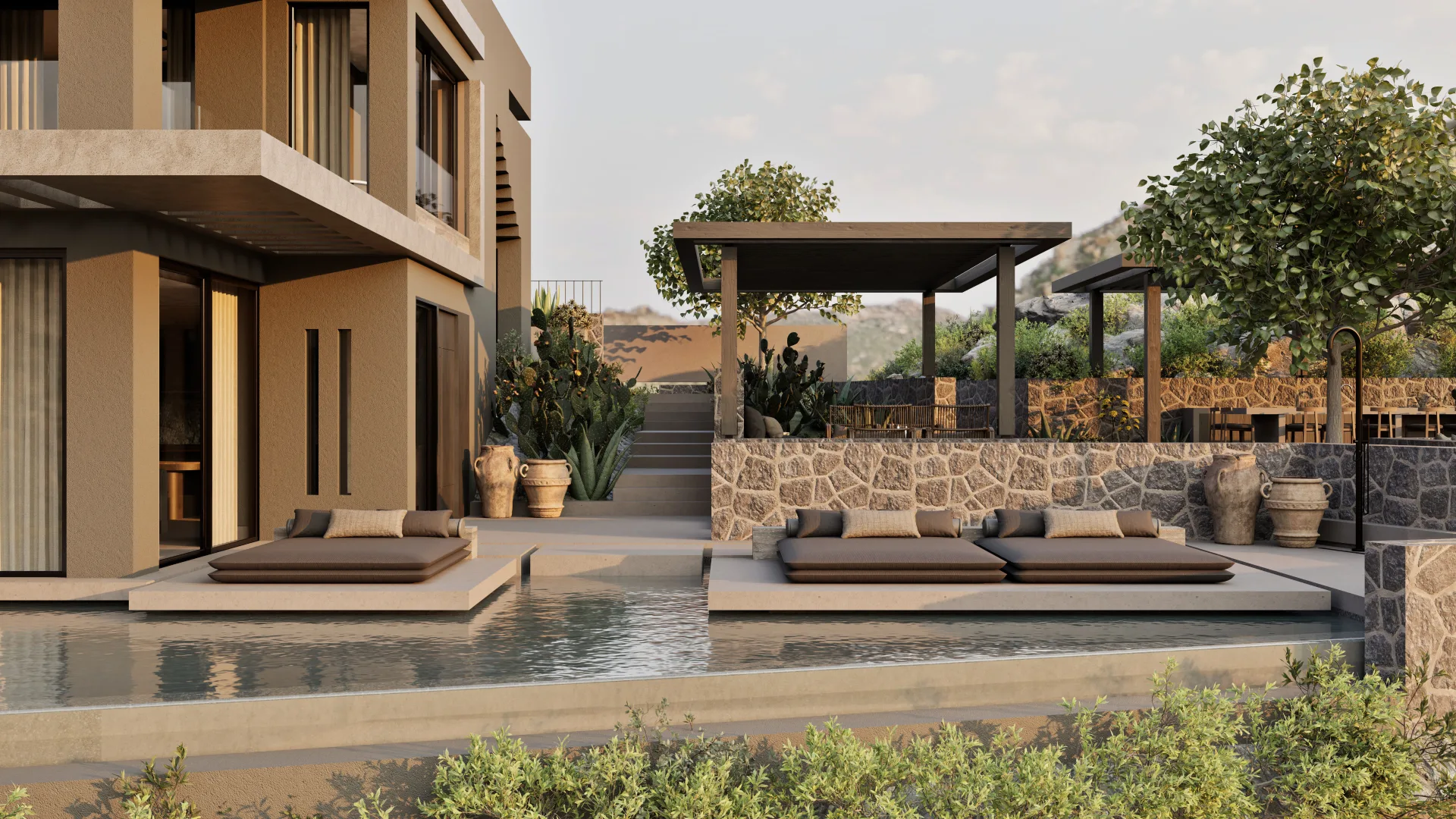
Or Do We Need Architects More Than Ever?
Architects
In recent years, artificial intelligence has entered the field of architecture with remarkable momentum. Within just a few seconds, it can generate images of striking houses, organic forms, and futuristic volumes that seem ready for the cover of a design magazine. The speed and ease with which these images are produced naturally raise an important question: do we still need the architect, or is an algorithm enough?
The answer lies in the fundamental difference between an image and a building. Artificial intelligence generates visual proposals. Architecture, however, is not merely visual. It is space that functions, that stands, that endures over time. An impressive rendering does not know the true orientation of a site, does not experience planning regulations, does not manage construction details, nor does it calculate cost or the phases of implementation. It cannot understand how a person moves through a space, where their gaze rests, or how light enters a room on a summer afternoon.
Architecture is a synthesis of technical knowledge, experience, and responsibility. And responsibility is not an algorithmic process.
The ease with which images are produced today has often led to a superficial understanding of design. We see forms that are visually impressive but fail to answer real questions. Volumes that ignore structural logic, openings without shading, proportions that work only on a screen. Architecture, however, is not concept art; it is the house that will be lived in, the building that will be used every day, the investment that must retain its value over time.
This does not mean that artificial intelligence has no place in our profession. On the contrary, it can be a powerful tool for exploring forms and analysing data. It can accelerate processes and open new perspectives. But where the tool ends, the architect’s judgement begins. The architect is the one who understands the context, coordinates different disciplines, translates the client’s needs into spatial experience, and ultimately takes responsibility for the realisation of the project. It is the architect who stands on the construction site and provides solutions when theory meets reality.
In the age of artificial intelligence, the role of the architect is not diminishing; it is becoming more essential. As the speed of image production increases, the value of discernment, selection, and synthesis becomes even greater.
Architecture is not a matter of speed. It is a matter of quality, consistency, and responsibility towards space and the people who inhabit it. And that, at least for now, cannot be replaced by any algorithm.