Architecture
Choosing the right flooring for an outdoor space is a decisive step in every architectural project. The outdoor area is the first element one encounters in a home or commercial building, and the flooring is what defines both its aesthetic identity and its functionality. Today, three of the most popular choices in residential and professional projects are tiles, wooden or synthetic deck with a wood texture, and industrial floors. Each option has its own characteristics and can transform a space in a unique way.
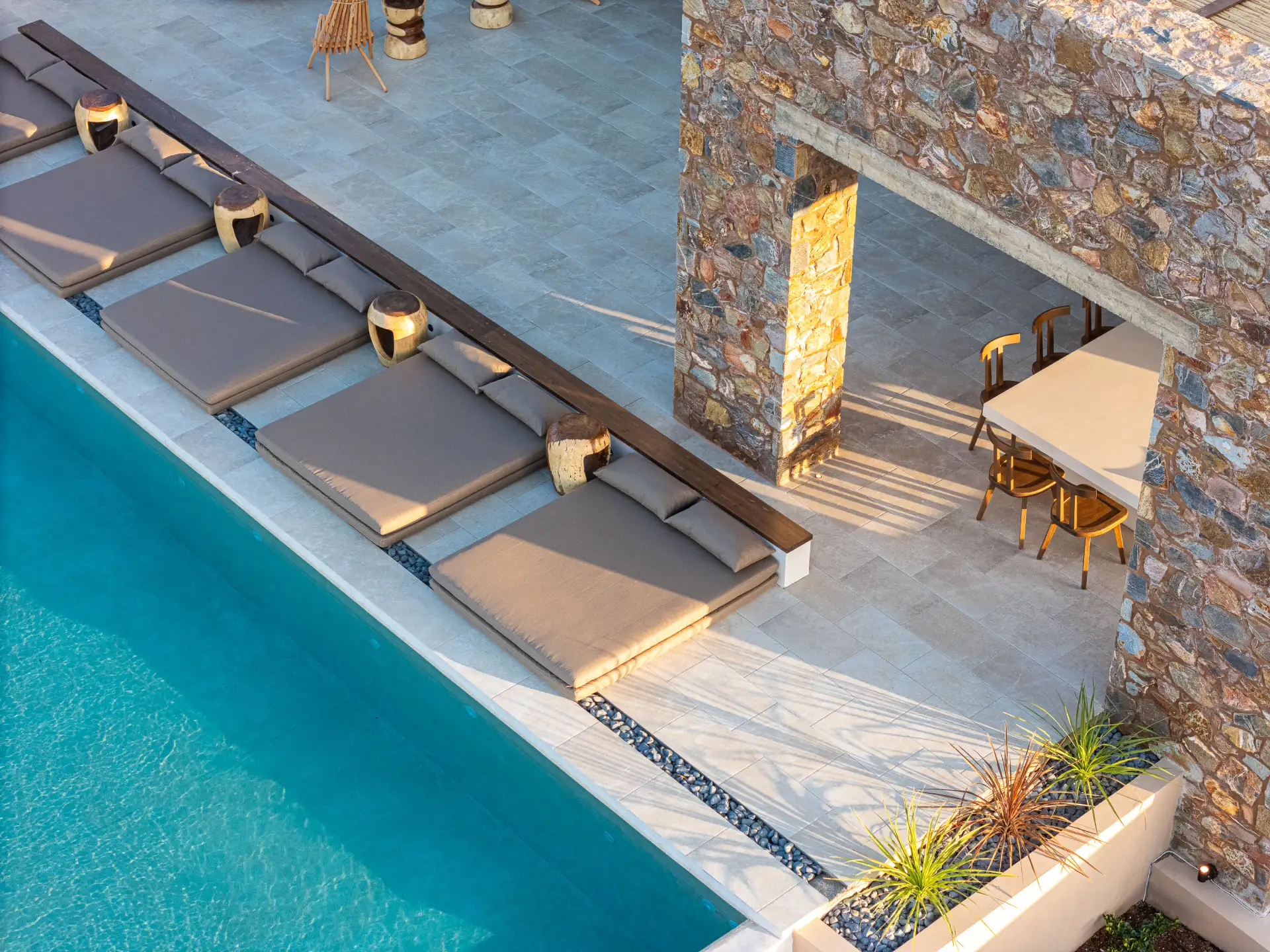
Outdoor tiles are a timeless and highly practical solution. In architecture, they are valued for the variety they offer in shapes, colors, and textures, as well as for their durability against daily use, humidity, and temperature changes. One of their key advantages is that they can be used both indoors and outdoors—even submerged in water, such as in swimming pools. From a design perspective, tiles can adapt to any style: from classic and traditional courtyards to modern terraces with a minimal character. A properly installed tile can give an outdoor space a sense of luxury and practicality, making it ideal for those who seek durability combined with easy maintenance.
On the other hand, decking, whether made of natural wood or synthetic WPC, brings warmth and authenticity into outdoor areas. In architecture, it is often integrated into homes that emphasize a strong connection with the garden or surrounding landscape, while in interior and exterior design it creates a welcoming atmosphere that is difficult to replicate with other materials. Decking is especially popular around swimming pools, in gardens, and in relaxation areas, as it is comfortable to walk on and adds a sense of intimacy. Synthetic deck, in particular, offers greater resistance to moisture and sunlight, making it an ideal choice for regions with challenging weather conditions.
Industrial flooring represents a broader category used for both aesthetic and practical purposes in architectural and design projects for outdoor spaces. It is divided into two main types: polished cement (microcement) and quartz flooring, and the classic industrial floor.
Polished Cement & Quartz Flooring
Polished cement and quartz flooring have become favorite choices in contemporary projects, primarily because of their minimalist and elegant look. They create seamless surfaces without joints, giving a sense of clean lines and modern luxury. In addition, they offer the ability to select colors so they can blend perfectly with the rest of the architectural composition.
Their main drawback, however, is limited durability. They are not suitable for spaces exposed to heavy use or constant stress and require regular care to maintain their appearance. Nevertheless, they remain an excellent option when design and aesthetics take priority over functionality.
Classic Industrial Flooring
The classic industrial floor is the most durable version of this category. It is mainly used in ramps, garages, and outdoor surrounding areas, where wear and pressure are intense. Its strength lies not only in its exceptional resistance but also in the ability to customize not only the color but also the texture, with finishes such as cobblestone effect or brushed surfaces. This flexibility allows it to adapt to different project needs without compromising functionality.
From a design standpoint, the classic industrial floor falls short in terms of aesthetics, as it conveys a more technical and utilitarian character. However, for projects where durability and long-term use are the top priorities, it remains a reliable and effective solution.
In summary, choosing between tiles, decking, and industrial flooring depends entirely on the result one wishes to achieve. If practicality and design variety are the goal, tiles are the safest choice. If modern aesthetics and sleek surfaces are desired, polished cement is ideal. And if the aim is to create a warm, natural feel, decking is the perfect solution.
Architecture and design are not limited to interi