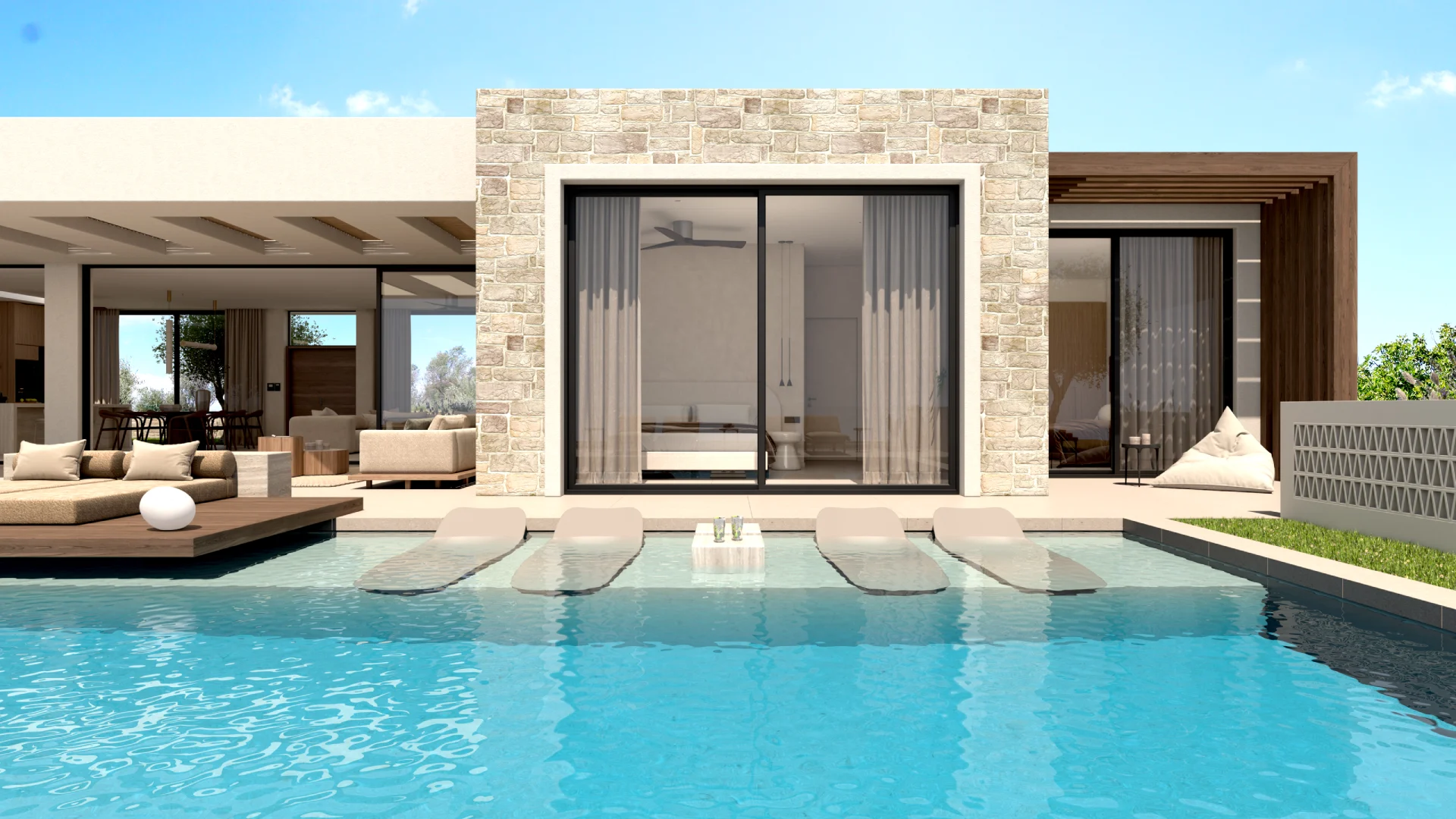
architecture rethymno
Beyond being a symbol of luxury and wellness, the swimming pool has evolved into a defining element of outdoor design — both in private residences and in professional spaces. Choosing the right type of pool, combined with thoughtful design, can elevate a space both functionally and visually, increase property value, and transform an outdoor area into a haven of relaxation, hospitality, and enjoyment.
Concrete pools remain the most timeless and versatile option. With unlimited possibilities in shape and size, they adapt seamlessly to the style and requirements of any space. They are ideal for those seeking full control over the design, aiming for a result that aligns perfectly with their personal taste and expectations.
On the other hand, prefabricated or fiberglass pools offer speed and ease of installation, with lower costs and reduced maintenance needs. Still, they can be just as aesthetically pleasing when paired with the right materials and equipment.
Yet beyond construction, the type of pool chosen plays a key role in both functionality and the final visual effect. From classic styles to modern, high-design alternatives, every pool type serves a different need and aesthetic.
One of the most important decisions in outdoor space design is choosing the appropriate pool system. Skimmer pools, where the water level is slightly below the edge, remain one of the most popular and economical solutions. On the other hand, overflow pools offer a completely different aesthetic, creating a mirror-like water surface that integrates beautifully into the environment. Water touches the edges with graceful fluidity, giving a sense of continuity with the outdoor space.
And of course, we can’t leave out infinity pools — the sleek, architectural designs that create the illusion of water vanishing into the horizon. These are ideal for homes or accommodations with stunning views, offering a unique character and ultimate resort feeling. Unsurprisingly, they are considered statement design choices, often preferred by architects and high-end hospitality brands.
The intended use of a pool is another key factor that shapes its design and type. The needs of a private home differ from those of a hotel, while pools for sports or therapeutic use require entirely different specifications. Depth, water temperature, lighting, and surrounding landscape all play a crucial role in shaping each project.
In recent years, alternative approaches to pool design have gained increasing popularity. Architecture today is not just about aesthetics — it embraces sustainability, energy efficiency, and environmental respect. Solutions such as solar heating systems, eco-friendly materials, and chemical-free filtration (using plants and natural filters) represent a new, more conscious philosophy in pool design and construction. These create a more natural and harmonious atmosphere, ideal for outdoor areas aiming for a grounded, earthy vibe.
Above-ground pools also offer flexible solutions for spaces with construction or budget limitations, while indoor pools, either in homes or spas, are perfect for year-round use — especially when combined with heating or hydrotherapy systems.
Technology has added a whole new dimension to the pool experience. From LED lighting and automated cleaning systems to smart controls for temperature and filtration via mobile apps, today’s pools offer unmatched comfort, ease, and enjoyment.
Designing a pool is not merely a construction project — it’s a creative journey.
It’s the process that brings together function and beauty, technology and nature, personal needs and architectural harmony.
The final result should serve, inspire, and impress.